
Learning My Own Lessons
You know what sucks?
Facing the uncomfortable truth that sometimes you aren’t listening to your own words.
Last week, I wrote about what our presence teaches people, and how we as leaders often enable the patterns that are creating our frustration. We're doing more than solving today's problem, I wrote. We're quietly, if unintentionally, normalizing tomorrow’s behavior.
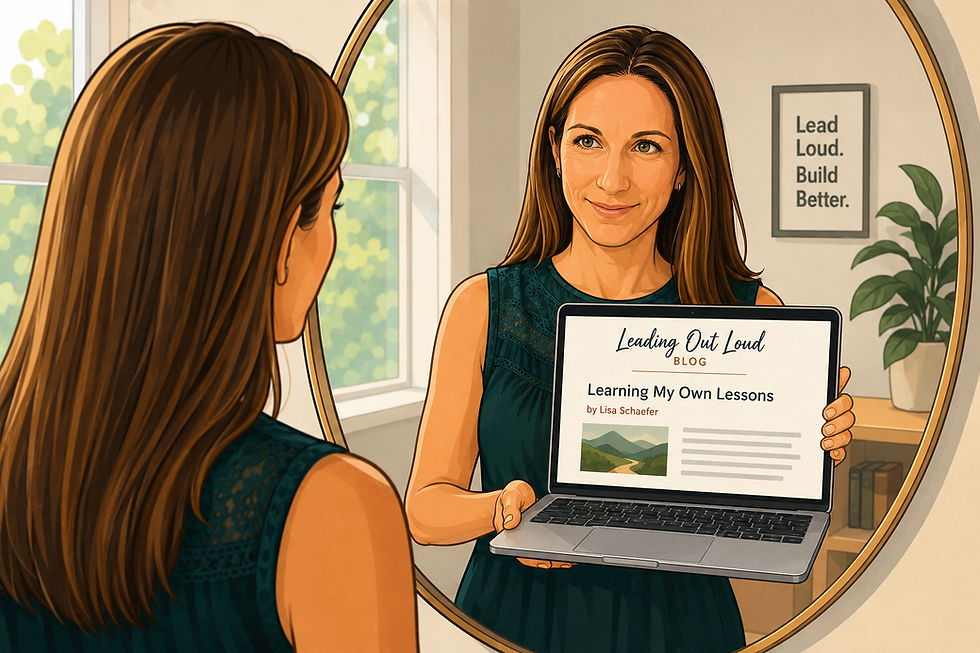
This week, it felt like looking in a mirror. Those words were staring right back at me.
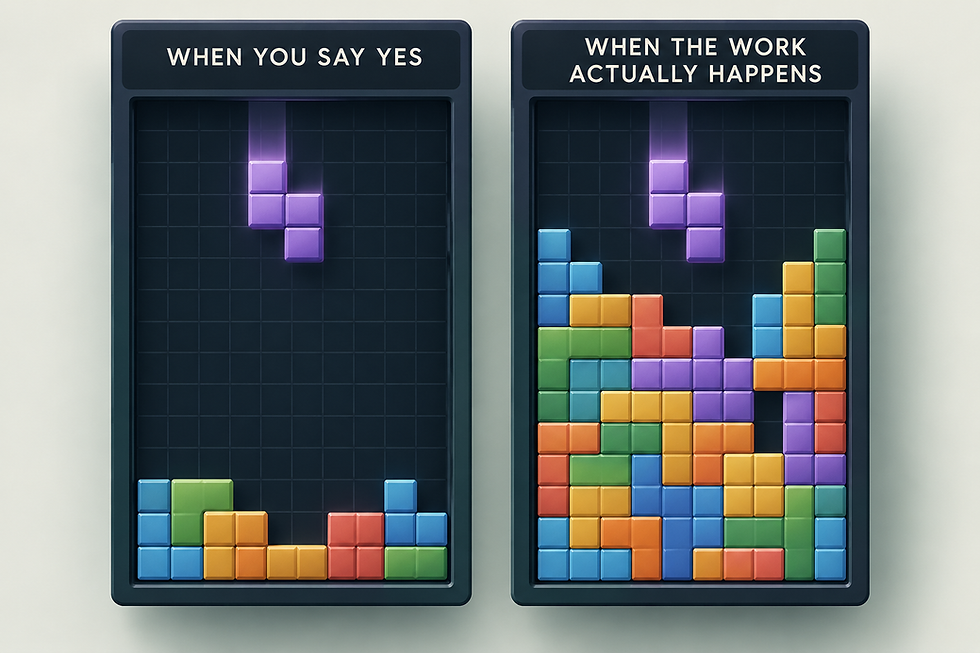
For a while now, I've been frustrated with myself. For all I write and teach about setting priorities, focusing on long-term goals and making sure our daily work advances the vision, I kept finding myself pulled away by the next email, the next client question, the next "Can you take care of this?"
Then last Friday, I was talking with a colleague and venting about yet another problem I'd found in a system that seemed to invent a new way to torture me every day. Right in the middle of my rant, one of those "Can you take care of this?" emails came in.
“Sure, I can stop what I’m doing right now to answer your question,” I muttered sarcastically under my breath as I went to open it.
My colleague bravely (after all, they knew I wasn't in the best mood at that moment) and wisely challenged me.
“Do you actually need to deal with that right now?”
Oh.
With that single question, they interrupted my automatic reaction long enough to create a choice. The honest answer was no – I didn’t need to deal with it right then. I went back to the problem at hand, albeit with a vaguely uneasy feeling at not dealing with the email anyway.
Maybe, I thought afterward, I just need a better system. And that’s what I thought this week’s blog was going to end up being about – the different ways I could structure my work and my schedule to make sure I was focusing on my priorities and long-term goals and not getting pulled in 18 other directions in the moment by the pinging things.
Until Saturday, when I was driving home from my morning spin class and picking up my grocery order, listening to a podcast with Brene Brown and Aiko Bethea.
Bethea said this: “The most complicated thing to lead is yourself… We get to pump the brakes. But do we have the mindfulness and presence to actually do it? Or is it easier to tell ourselves it had to be done yesterday?…It’s easier to be in the frenzy of X, Y, and Z. We like to feel, my worth is based on how much I produce, how quickly I produce it, and I make that, give the answer and do all these other things, versus what does it take to pump the brakes?”
Oof.
Last week’s blog suddenly came rushing back at me.
What might I have done that helped create this pattern?
What if my frustration wasn’t about the system managing the work, but about my own thoughts and behaviors around how I respond to the work?
Well, f***.
That uneasy feeling I had about not dealing with that email in the moment? It had less to do with the urgency of the issue itself, or whether I used a time-blocking calendar, or whether I turned my email off for a little while so I could engage in deep work.
It had everything to do with how I'd quietly started measuring my value not just by the quality of my work but also by the quantity. Every quick reply, every immediate answer, every interruption I handled in the moment reinforced the idea that this was what being dependable looked like.
The problem wasn't my calendar. It was my own habits. It was the story I'd internalized about what made me valuable. I wasn't afraid the email wouldn’t wait for me to come back to it. I was afraid that I would be the kind of person who let it – and the person who sent it – wait.
And until I recognized how my own thoughts and behaviors contributed to the pattern, any system I set up is only ever going to be partially successful at best. Sure, it might help for a little, but unless I’m willing to do the hard work of looking at how I measure my own value, the old habits and behaviors will eventually overtake the system.
Now to be fair, systems are important. Broken systems need to be fixed, and new systems need to be designed to actually make things better. But a system in and of itself can’t magically teach us new habits and ways of thinking. (Ironically, that's another one of my own leadership lessons coming back to teach me - all the training in the world can’t overcome a culture that doesn’t allow it to take root.)
It’s not going to be an overnight change. And I’m going to need folks like my brave colleague to help me hold the mirror up every now and then too.
Funny thing about writing every week: eventually your own words start following you around.
Sometimes they encourage you.
Sometimes they challenge you.
And sometimes they quietly ask whether you're willing to live the advice you've been giving everyone else.
This week, mine did.


Comments