
The Process Worked Perfectly on Paper
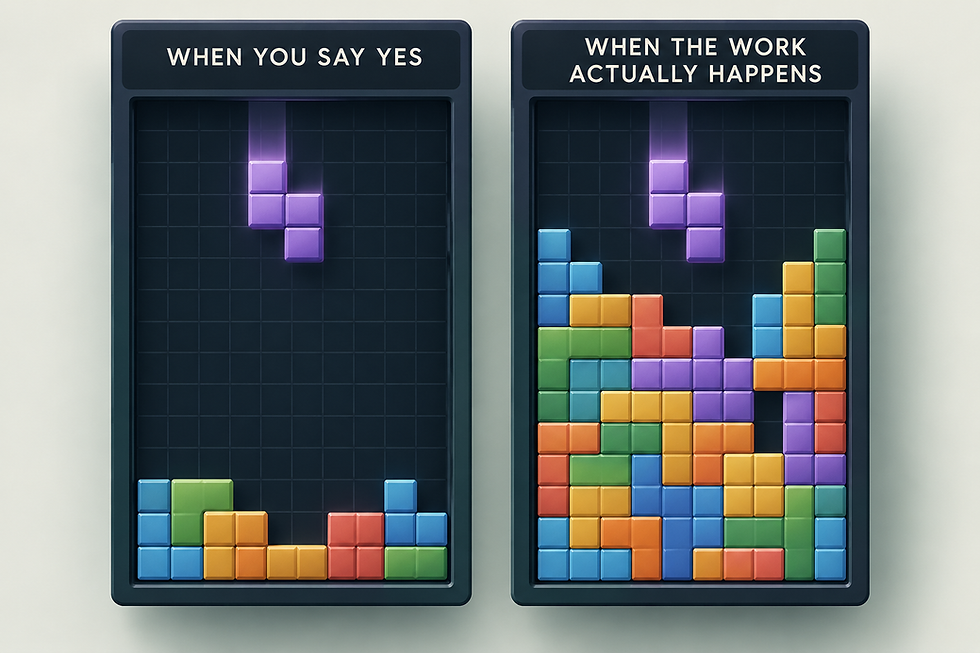
The process worked perfectly on paper. Until we introduced people.
We did all the things.
We brought people into the conversation. We explained why the change mattered. We built the process. We brought in the trainer. Everyone seemed to understand what we were trying to accomplish.
And then, two days later, half the organization was quietly doing exactly what it had done before.
Not necessarily because anyone was actively resisting the change. They just went back to what they knew. And we were left scratching our heads wondering where we went wrong.
We sometimes treat the launch of a new process, system or way of working as though it is the change. We've communicated it. We've trained people. We've answered their questions. What else is there to do?
As it turns out, quite a bit.
Agreement isn't adoption
Organizations have muscle memory.
People know which spreadsheet to open, who to ask when they need something and how decisions actually get made. Some of those practices were deliberately designed. Others evolved because somebody needed to solve a problem seven years ago and everyone has been doing it that way ever since.
A new process doesn't arrive on a blank slate. It lands on top of all of that.
People can understand why something needs to change. They can genuinely agree with the new approach. Then Monday morning gets busy and the familiar habits creep back in.
When they revert to familiar ways of working, the temptation is to decide we have a people problem. Why can't people just be open to change? We explained this. We trained them. Why aren't they doing it?
But what we're seeing may be telling us different things.
Sometimes the answer is clarity. Sometimes it is training. Sometimes the process itself needs work.
And sometimes the process is reasonable, people understand it…but we allow them to ignore it.
Sometimes the old way is being rewarded while the new way is merely being requested.
And sometimes leadership is saying, “Everyone needs to use the new process,” while continuing to ask three people to make exceptions for them.
Those are different problems. More training won't solve an accountability problem. Accountability won't fix a terrible process. And neither will overcome leadership behavior that quietly signals the new expectation is optional.
The organization keeps teaching after the trainer leaves
Training might last a few hours. The organization teaches people how to behave every day.
If a leader never asks whether the new process is being followed, or never notices when it isn't, that's teaching something.
If falling back on the old way feels faster because it's familiar — and nobody redirects it — that's teaching something.
If someone struggles with the new approach and immediately gets told, “Just do it the old way this time,” that's teaching something too.
Sustainable change requires leaders to keep leading the change long after the rollout is over.
That means modeling it themselves, but it also means paying attention. Asking about the new process. Reinforcing it when people use it. Redirecting when they don't. Creating an environment where colleagues are willing to remind one another, “Wait, aren't we supposed to be doing this differently now?”
And doing all of that more than once.
Because change has an awkward middle for everyone.
People will need reminders. They'll forget steps. They'll ask questions whose answers were absolutely covered in the training. They'll be slower while they're learning. They'll get frustrated.
Leaders will too.
We'll wonder why we're still talking about this. We'll wonder whether it would be easier to just let this one go. And when someone who wasn't enthusiastic about the change points to the first bump in the road and says, See? The old way was easier, we may start wondering whether they were right.
There's an important difference between this isn't working and we aren't good at this yet.
Leadership has to stay close enough to know which one we're seeing.
A bump in the road might reveal a legitimate problem with the new process. We should pay attention to that. But learning a new way of working is also sometimes slower and harder before it becomes easier.
If we're asking everyone else to work through that discomfort, we have to be willing to work through it too.
Because if every early frustration sends us running back to the old way, we've taught people something else: wait long enough, and this change will go away too.
The launch isn't the implementation
Designing the process matters. So does understanding how people work today, involving them in its development, explaining why the change matters and giving them the training and tools they need to succeed.
All of that is part of leading change. So is what happens next.
Because whether the change takes hold is determined in all the ordinary moments when people decide which spreadsheet to open, which process to follow, which behavior to reinforce and whether the new expectation is really an expectation at all.
The process worked perfectly on paper.
Until we introduced people.
Good.
Because people aren't the complication we encounter after designing the change.
They're the part that makes it change at all.



Comments