
When a Group of Volunteers Becomes a Team
One of the things I've noticed about volunteer organizations is that we spend a lot of time helping people get nominated, appointed or elected—and almost no time helping them become a team.
Think about it.
We explain the bylaws. We hand out committee assignments. We talk about officer roles and meeting schedules. We make sure people know when to show up and how to vote.
What we don’t talk about is what it actually means to act as a board instead of a collection of individual volunteers.
People volunteer because they want to contribute. They bring professional expertise, new ideas and a genuine desire to make the organization better.
The challenge is that many of us have never been taught that the job changes once we join the board.
I've started to think that every volunteer board member has two jobs.
The first is obvious: Bring your experiences, perspectives, and ideas to the table.
The second, less so: Help a group of individuals become a team that can make good decisions for the organization and the people it serves.
That's a much bigger responsibility than it might seem.
You don't just volunteer. You don't just get nominated, appointed or elected.
You become responsible for something bigger than yourself.
I think that's the part we don't talk about enough. That when you take on a board role, you're not just committing to a title. You're not just committing to attending meetings. You're not just committing to the work.
You're committing to the team, to the organization and to the mission.
That means the job can't just be about your own ideas, your own priorities or your own piece of the work.
That means recognizing that you're part of a group working toward a common goal.
That doesn't mean checking your opinions at the door. Healthy boards need different perspectives and healthy debate.
But at some point, the question has to shift.
From: What do I think we should do?
To: What does this organization need from us?
I've been searching for the right way to think about this, and I keep coming back to the image of a relay team.
Not because one person carries the baton while everyone else watches. Because a successful relay team only works when everyone understands they're part of something larger than themselves.
The baton isn't the presidency. It isn't an officer title. It's the mission of the organization.
And every board member has a role in carrying it forward.
The goal isn't for one person to carry the organization. The goal is for the team to keep moving the mission forward.
I've realized that's what separates many of the strongest volunteer organizations from the ones that struggle.
It's not that they have the smartest people. It's not that they always have the strongest president. It's that they've figured out how to become a team.
A team that shares responsibility.
A team that works through disagreements.
A team that understands that officer titles come with responsibilities, not just recognition.
A team that helps new volunteers find their footing instead of expecting them to figure it out on their own.
A team that asks not, "Whose job is this?" but, "What does the organization need from us?"
A team where a group of volunteers learns how to work together toward something bigger than themselves.
The more I've thought about it, the more I think that's what leadership really looks like in volunteer organizations – not taking control, or making sure your priorities win or waiting for someone else to step up.
It's recognizing that you've joined a team, doing your part to help carry the mission forward and supporting the people running alongside you.
And it's leaving the organization stronger for the volunteers who come next.
Maybe that's the part of volunteer leadership we should spend more time talking about – not just how to get people onto the board, but how to help them become a team.
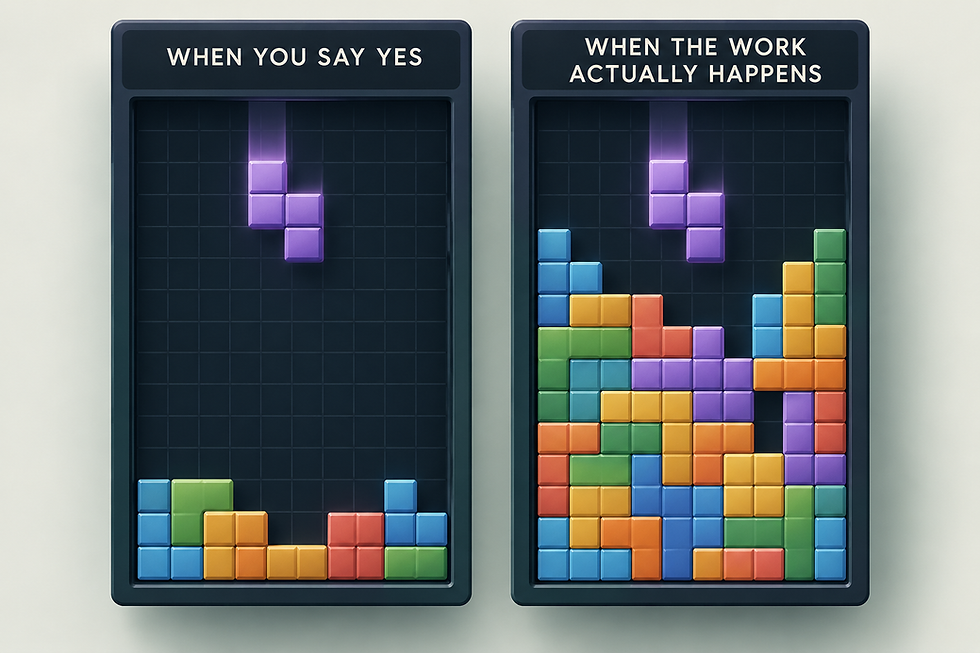
Because when you volunteer, you're not just saying yes to a title, the meetings and the work.
You're saying yes to the team.
The organization.
And the mission.



Comments